You Won’t Believe What I Found in Toulouse — It’s All About That Pink Hue
Toulouse isn’t just another French city — it’s a living canvas of terracotta rooftops and rose-colored bricks that glow like magic at sunset. I went looking for quiet streets and old-world charm, but what I discovered was a whole architectural language speaking through arches, courtyards, and centuries-old façades. This is a city that wears its history proudly, not in grand monuments, but in the very texture of its walls. If you’ve ever fallen in love with a city just by walking down its alleys, Toulouse will feel like home.
First Impressions: A City That Glows from Within
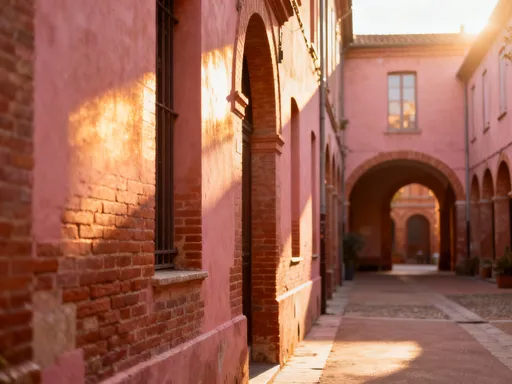
From the moment you step off the train or drive into Toulouse, the city reveals itself in hues rarely seen elsewhere in France. The buildings, constructed from locally sourced brick, radiate a soft pinkish glow, especially during the golden hours of morning and evening. Unlike the limestone grandeur of Paris or the ochre stone of Lyon, Toulouse chooses warmth over formality. Its identity is rooted in the humble yet elegant terracotta brick, known locally as la brique, which has shaped the city’s skyline for over a thousand years. This is not a city built for show, but one that evolved organically, brick by brick, reflecting both practicality and artistry.
The pink hue is more than aesthetic—it’s a dialogue between climate, material, and craftsmanship. The clay-rich soil of the region made brick the natural building choice, and generations of masons perfected its use. The bricks are laid in intricate patterns—herringbone, diamond, and checkerboard—adding rhythm and depth to otherwise simple façades. As sunlight moves across the city, the color shifts from pale rose to deep salmon, giving Toulouse a living, breathing quality. It’s a city that changes with the light, inviting visitors to return at different times just to witness its transformation.
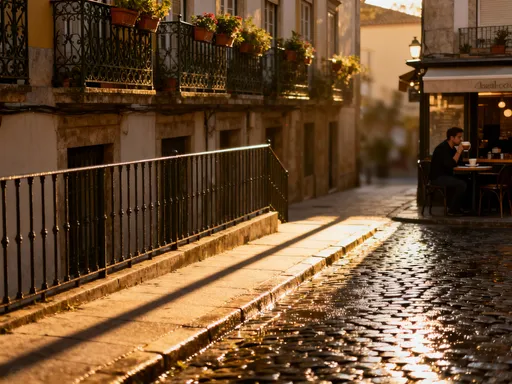
Walking through neighborhoods like the historic center or the Carmes district, one senses a harmony between scale and intimacy. Buildings rarely rise above five stories, preserving a human-centered environment. Arched windows, wrought-iron balconies, and recessed doorways create shadow and texture, while narrow streets offer respite from the southern sun. This is not a city designed for speed, but for lingering—where a morning errand becomes a stroll, and a coffee break unfolds beneath a centuries-old arcade. The warmth of the bricks seems to extend to the people, whose pace of life matches the city’s gentle rhythm.
What sets Toulouse apart from other French cities is its quiet confidence. There are no sweeping Haussmannian boulevards or monumental triumphal arches. Instead, its beauty lies in the accumulation of small details: a carved keystone above a doorway, a hidden courtyard glimpsed through a wrought-iron gate, the way ivy clings to a brick wall like a second skin. This is a city that rewards slow exploration, where the most memorable moments often come from unexpected turns down nameless alleys or quiet plazas where locals gather for conversation.
The Heart of the Matter: Capitole de Toulouse and Civic Pride
At the center of Toulouse stands the Capitole, both a seat of local government and a symbol of civic identity. Its grand façade, a neoclassical masterpiece completed in the 18th century, faces the bustling Place du Capitole—a vast square that serves as the city’s living room. Unlike many administrative buildings that feel closed off or austere, the Capitole invites engagement. Its wide steps are a favorite perch for visitors and residents alike, a place to sit, watch the world pass by, or enjoy impromptu performances by street musicians.
The contrast between the Capitole’s limestone exterior and the surrounding pink brick buildings is striking, yet it feels intentional rather than disruptive. The neoclassical style reflects Toulouse’s desire to align with national ideals during the Enlightenment, while the use of local materials in its interior—particularly the brick vaults and wooden beams—anchors it firmly in regional tradition. Inside, the building unfolds like a series of theatrical sets: the Salle des Illustres, with its domed ceiling and heroic murals, celebrates the city’s historical figures, from scientists to poets. The grand staircase, lit by cascading chandeliers, feels more like a stage than a passageway.
Beneath the formal elegance lies a deep sense of civic ownership. The Capitole is not just an administrative hub—it houses a concert hall, a theater, and public galleries, all freely accessible during opening hours. Locals attend classical concerts in the ornate Salle Pierre Carraud or explore temporary art exhibitions in the ground-floor spaces. This blending of governance and culture reflects a broader French ideal: that public institutions should serve not only bureaucratic functions but also enrich daily life. In Toulouse, the line between government and community is beautifully blurred.
The Place du Capitole itself is a study in urban design. Paved in warm-toned stone, it slopes gently toward the Capitole’s entrance, creating a natural amphitheater for festivals, markets, and public gatherings. During the Fête de la Musique or the Christmas market, the square transforms into a vibrant stage for celebration. Yet even on quiet weekdays, it pulses with life—children chase pigeons, couples sip wine at outdoor cafés, and elderly residents play pétanque on a nearby court. The architecture here doesn’t dominate; it facilitates, creating a space where community can flourish.
Medieval Magic in the Saint-Sernin Quarter
Just a short walk from the Capitole lies one of Europe’s most remarkable religious structures—Basilique Saint-Sernin. A UNESCO World Heritage site and a key stop on the Camino de Santiago pilgrimage route, this Romanesque church stands as a testament to medieval engineering and spiritual devotion. Its massive brick façade, crowned with a rose window and flanked by a sturdy bell tower, rises with quiet dignity above the surrounding rooftops. From a distance, it appears almost fortress-like, but up close, its beauty unfolds in layers of sculpted detail and rhythmic proportion.
The basilica’s design follows the classic pilgrimage church model: a long nave, side aisles, and a transept that leads to a radiating chapel behind the altar. What makes Saint-Sernin exceptional is its harmony—each arch echoes the next, each column supports not just the roof but a sense of order and continuity. The interior, cool and dimly lit, invites contemplation. Sunlight filters through high windows, illuminating centuries-old frescoes and gilded altarpieces. Pilgrims once rested here on their long journey to Santiago de Compostela, and the quiet reverence of the space still honors that legacy.
Around the basilica, the neighborhood retains its medieval character. Cobbled streets wind unpredictably, connecting small squares where plane trees provide shade and fountains trickle softly. Half-timbered houses with overhanging upper stories lean gently toward one another, as if sharing secrets. Hidden courtyards, accessible through narrow passageways, reveal remnants of cloisters and ancient wells. This is a district where time feels layered—modern life coexists with echoes of the past, and every corner seems to hold a story.
One of the joys of exploring Saint-Sernin’s surroundings is discovering the small artisans and family-run shops tucked into old buildings. A bakery might occupy a 13th-century granary, its oven still fueled by wood. A bookshop could be housed in a former monastery scriptorium, its shelves built into stone alcoves. These adaptive reuses are not gimmicks but natural evolutions, respecting the building’s history while serving contemporary needs. It’s a model of preservation that feels alive, not frozen in time.
Canal du Midi: Where Architecture Meets Landscape
Leaving the city center and heading east, the urban fabric softens into greenery along the Canal du Midi. Completed in 1681 after 14 years of construction, this 240-kilometer waterway was a marvel of engineering, linking the Atlantic to the Mediterranean. In Toulouse, it begins as a tranquil ribbon bordered by double rows of majestic plane trees, their canopies forming a living tunnel overhead. The canal is not just a transportation route but a landscape architecture project of the highest order—one that blends utility with beauty.
The structures along the canal reflect its dual role. Stone lock gates, some still manually operated, are works of precision masonry. Lock-keeper houses, painted in soft yellows and ochres, sit beside the water with flower boxes spilling geraniums. Aqueducts carry the canal over small rivers, their arches echoing the rhythm of Roman bridges. Even the towpaths, once trodden by mules pulling barges, are now peaceful walking and cycling trails, shaded and serene. Every element, from the water’s edge to the tree-lined banks, was designed with both function and harmony in mind.
Spending a morning or evening along the canal offers a different kind of architectural appreciation—one that includes sky, water, and vegetation as essential components. Couples picnic on the grassy banks, children toss bread to ducks, and joggers move rhythmically beneath the trees. The pace slows, and the city’s pink bricks give way to reflections in still water. It’s a place of gentle movement and quiet observation, where the built environment dissolves into nature.
For visitors, a boat tour or a rented electric barge provides a unique perspective. Gliding along the canal, one sees Toulouse from a new angle—houses with back terraces opening to the water, hidden gardens, and the occasional heron standing motionless in the reeds. The experience is meditative, a reminder that architecture is not only about walls and roofs but also about how spaces connect people to each other and to the natural world.
Hidden Courtyards and Private Mansions: The Secret Life of Toulouse
Beyond the public squares and main streets, Toulouse holds a more intimate architectural treasure—the hôtels particuliers, or private mansions, built by wealthy merchants and nobles between the 16th and 18th centuries. These townhouses, often indistinguishable from the outside, conceal elaborate interiors behind heavy wooden doors. Step inside, and you enter another world: courtyards paved in stone, spiral staircases wrapped in sculpted foliage, and arcades lined with slender columns. These spaces were designed not for display, but for private contemplation and family life, blending Italian Renaissance influences with local craftsmanship.
One of the finest examples is the Hôtel d’Assézat, now home to the Bemberg Foundation. Built in the mid-16th century, its façade is understated, but the inner courtyard is a masterpiece of symmetry and detail. The double arcade, with its Corinthian columns and intricately carved capitals, frames a central well. Sunlight dances across the stone, and the sound of footsteps echoes softly. Inside, the mansion hosts a remarkable art collection—Renaissance portraits, Dutch landscapes, and modern works by Bonnard and Modigliani—creating a dialogue between architecture and artistic expression.
Access to these private spaces is often limited, but guided tours and open house events during Heritage Days offer rare glimpses. Walking through the Hôtel de Bernuy or the Hôtel de Bagis, one feels the weight of history—not as a museum piece, but as a lived experience. The plasterwork, the painted ceilings, the inlaid wood floors—all speak of a time when beauty was woven into daily life. These mansions are not monuments to wealth, but testaments to a culture that valued refinement, privacy, and the art of living well.
The survival of these hôtels particuliers is due in part to Toulouse’s conservation efforts. Rather than demolishing old buildings for modern development, the city has encouraged restoration and adaptive reuse. Some mansions now serve as cultural centers, boutique hotels, or private offices, ensuring their continued relevance. This approach reflects a broader philosophy: that heritage is not a burden, but a resource to be nurtured and shared.
Modern Touches Without Losing the Soul
Toulouse’s architectural charm does not come from being frozen in time, but from its ability to evolve without erasing its past. Contemporary projects in the city demonstrate a thoughtful balance between innovation and respect for tradition. The Toulouse Metro, for example, is not just a transit system but a canvas for design. Stations like Jeanne d’Arc or Palais de Justice feature artistic tile work, natural light, and materials that echo the city’s brick palette. Even underground, the sense of place is preserved.
Another striking example is the Cité de l’Espace, a science park dedicated to aerospace—a nod to Toulouse’s role as a European hub for aviation and space technology. The architecture here is boldly modern: geodesic domes, metallic spacecraft models, and interactive pavilions shaped like rockets. Yet the design avoids clashing with the surrounding landscape. Green spaces buffer the structures, and the overall layout encourages exploration, much like the city’s historic quarters. It’s a reminder that modernity need not be cold or alienating—it can be playful, educational, and deeply connected to local identity.
New residential and cultural buildings continue this trend. Architects often use brick in contemporary ways—perforated screens, textured facades, or blended with glass and steel—to create structures that feel both new and familiar. The goal is not imitation, but dialogue: a new building might echo the rhythm of nearby arches or match the scale of surrounding homes. This sensitivity ensures that growth enhances rather than overwhelms.
Urban planning in Toulouse prioritizes walkability, green space, and pedestrian zones. The conversion of former industrial areas into mixed-use neighborhoods—like the Amiénaise district—shows how cities can grow sustainably. Old warehouses become apartments, factories turn into cultural hubs, and new buildings incorporate energy-efficient designs. These efforts reflect a vision of urban life that values both heritage and progress, where every generation leaves its mark without erasing the last.
Why Toulouse’s Style Matters — And How to See It Like a Local
Toulouse’s architecture is more than a collection of beautiful buildings—it’s a narrative of identity, climate, and community. The pink brick is not just a local material; it’s a symbol of resilience, adaptation, and pride. For centuries, Toulouse has built with what the land provides, shaping a city that feels rooted, authentic, and welcoming. Its streets tell stories of pilgrims, merchants, artisans, and innovators—each era leaving its imprint without overpowering the whole.
To experience Toulouse like a local, begin early in the morning when the light is soft and the streets are quiet. Walk from the Capitole to Saint-Sernin, then drift toward the Canal du Midi, allowing yourself to get lost in the side streets. Stop for a café au lait at a corner café beneath an arched passageway. Visit the Marché Victor Hugo, housed in a 19th-century iron and glass hall, and savor the colors and scents of regional produce. Let the city unfold at its own pace.
Photographers will find the best light for capturing the pink glow during the hour after sunrise and before sunset. Stand in the Cour d’Honneur of the Capitole or along the Allées Jean Jaurès to see the brick facades bathed in golden light. Join a guided architectural tour to access private courtyards or learn about lesser-known details, like the meaning behind carved grotesques or the history of the brick-making guilds.
Most importantly, engage with the rhythm of daily life. Sit in a plaza with a book, watch children play, listen to the chime of church bells. Toulouse rewards presence. It’s a city that doesn’t shout its beauty but whispers it, brick by brick, arch by arch. In an age of rapid change, it stands as a model of sustainable urban beauty—one where tradition and innovation walk hand in hand, and every wall has a story to tell.